
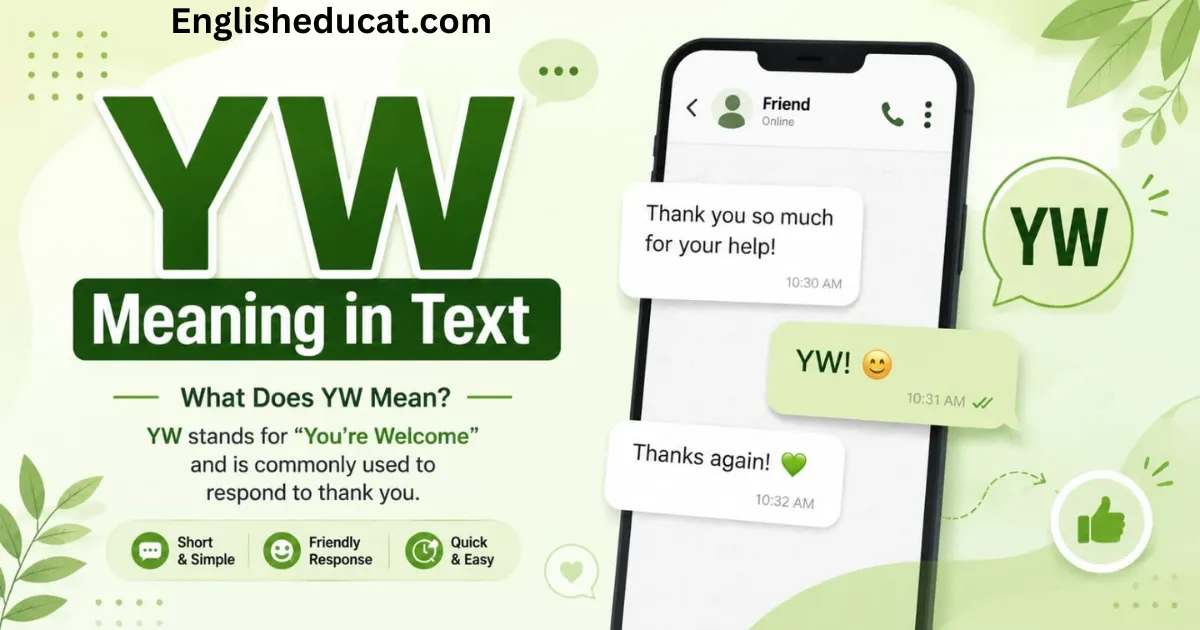
This context will cover everything about YW meaning in text. You will learn where it comes from, how it changes across apps, and when you should skip it and type the full word instead.
The YW meaning in text is simple: YW stands for “you’re welcome.” People type it right after when someone says “thanks” or “ty.” It is a very short and fast way to say thank you, and is used everywhere in group chats on Snapchat and other social media apps.
But YW meaning in text is not always that simple. The same two letters can convey warmth, flatness, or even sarcasm. This context focuses on the main meaning, “you’re welcome,” used in texting and covers a rare second meaning further down, so there will be no confusion either way.
What Does YW mean in Text? (Quick Answer)
YW is a texting abbreviation. It means “you’re welcome.”
People use it as a quick reply when someone says “thank you” or “ty.” Mostly it is written in lower words “yw”.
You will see it a lot from teens and young texters, especially on Snapchat or WhatsApp. And adults also use it in casual texting.
That is the core of YW meaning in text. Context can still shift how it feels. Keep reading to see how tone, platform, and punctuation change the message.
Where Did “YW” Come From? (Origin & History)
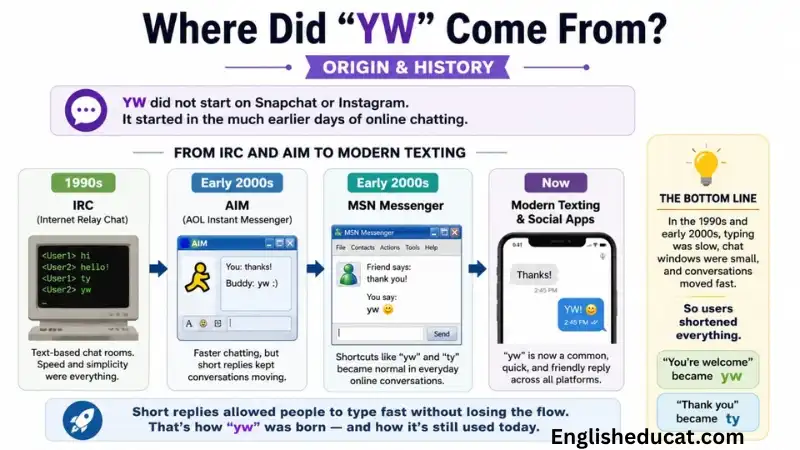
YW did not start on Snapchat or Instagram. It started in the much earlier days of online chatting.
From IRC and AIM to Modern Texting
In the 1990s and early 2000s, people chatted with others using tools like Internet Relay Chat (IRC), AOL Instant Messenger (AIM), and MSN Messenger. Typing was very slow in early keyboards. Chat windows were small.
So users shortened everything. “You’re welcome” became “yw.” “Thank you” became “ty.” These short replies allow people to type fast without losing the flow.
Why Character Saving Slang Took Off
Mobiles were often charged by character when sms become common in the early 2000s. Some plans were limited to 160 characters in text. Short abbreviations like YW saved both time and money.
That habit never went away. Unlimited texting and fast typing did not kill it off. YW is now one of many internet slang terms that grew from that same need for speed.
YW vs. Similar Texting Abbreviations
YW meaning in text is close to a few other short replies. Here is how they are compared.
| YW | You’re welcome | Casual | “yw, anytime!” |
| NP | No problem | Very casual | “np, glad to help” |
| TY | Thank you | Casual | “ty so much” |
| TYSM | Thank you so much | Casual, more enthusiastic | “tysm for this!” |
| YVW | You’re very welcome | Casual, warmer | “yvw, always here for you” |
Is YW the Same as NP?
No, YW means “you are welcome,” and NP means “no problem.” Both are replies of thanks. But NP feels more relaxed. It plays down the effort, almost like saying “it was nothing.”
How YW Is Used Across Platforms
YW meaning in text stays the same everywhere. It always points back to the same meaning: “you are welcome.” But how it feels can shift, depending on the app and the people involved.
Some platforms favor short and fast replies. Others expect a bit more warmth. Knowing the difference will help you to prevent sending the wrong reply.
YW on Snapchat
Yw is very common in Snapchat. It shows up in chat replies and story comments. Snapchat messages disappear very fastly so short replies like YW is a best choice.
YW on Instagram and TikTok
Yw mostly appears in comments and DMs on Instagram and TikTok. If someone thanks you for a shoutout or a tip than YW is a very quick and friendly way to respond.
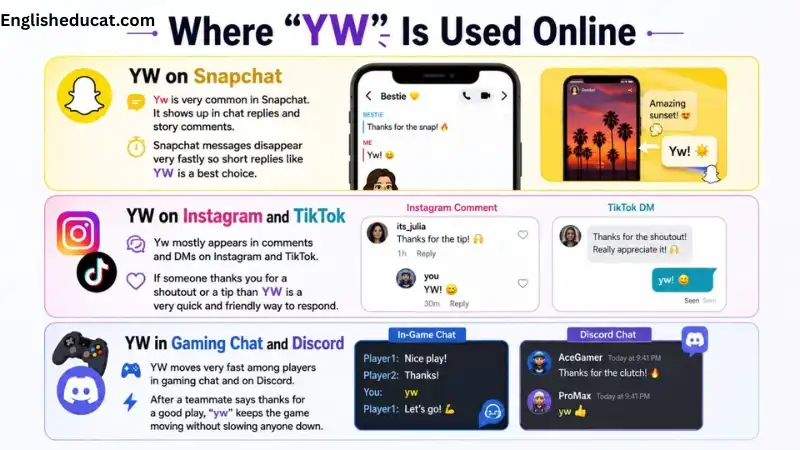
YW in Gaming Chat and Discord
YW moves very fast among players in gaming chat and on Discord. After a teammate says thanks for a good play, “yw” keeps the game moving without slowing anyone down.
YW on Dating Apps
YW can often feel different on Dating apps. A plain “yw” after a compliment might come across as low effort. Adding a playful line, like “yw, you owe me one 😉,” feels warmer and more personal.
YW in Work Chat and Email
YW is usually too casual in Workchat and email. Most people expect the full phrase, “you’re welcome,” in professional settings. Save YW for friends and casual group chats.
Is YW Rude, Sarcastic, or Flirty? (Reading the Tone)
YW is neutral by itself. It is not rude. But small details can change how it feels.
When YW Is Just Polite
YW is very polite most of the time. Someone says thanks, you reply YW, and the conversation moves on. Nothing more is meant by it.
When YW Feels Dismissive or Cold
YW can feel short without using an emoji or a warm word with it. In a serious or emotional conversation, a plain “yw” might come across as cold, even if that is not what the sender meant.
I learned this myself during a stressful week at work. A coworker thanked me for staying late to help finish a report, and I typed back “yw.” I replied without using emojis because I was in a meeting.
She later told me it felt distant, like I did not want to talk about it. I had not meant anything by it. I was just busy. That one short reply taught me something important: timing and tone matter as much as the words you choose, especially when someone is thanking you for something that really mattered to them.
When YW Is Sarcastic (“Yeah, Whatever”)
Rarely, YW can mean “yeah, whatever” instead of “you are welcome.” This usage is uncommon. It usually shows up after arguments or annoyed messages. The surrounding messages make this meaning clear.
When YW Reads as Flirty
YW can feel playful in a flirty text. Pairing it with a joke or a wink emoji often signals interest, not just politeness.
How Punctuation and Emoji Change the Meaning
A period after YW (“yw.”) can feel blunt or final. Adding an emoji, like 😊 or 👍, often softens the tone. This small choice often matters more than the word itself.
Real Examples of YW in Conversation
Seeing YW meaning in text in real conversations makes it easier to understand:
Casual friend text:
- “Thanks for helping me move!”
- “yw, anytime”
Snapchat DM:
- “Thanks for the shoutout 🙏”
- “yw 😊”
Gaming chat:
- “Thanks for the heal”
- “yw”
Professional Slack (a “don’t” example):
- “Thank you for reviewing my report.”
- “yw” ❌ (Better: “You’re welcome, happy to help.”)
Parent child text:
- “Thanks for picking me up, Mom!”
- “yw, love you”
How to Respond When Someone Says YW
Most of the time, you do not need to reply at all. Once someone says YW, the message feels finished.
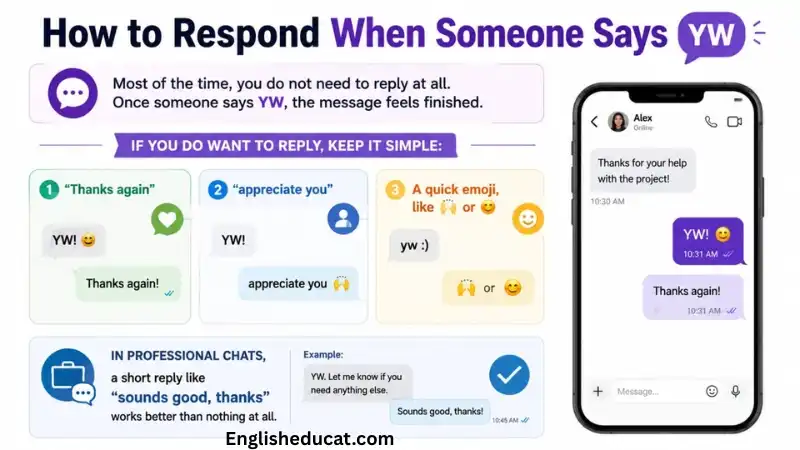
If you do want to reply, keep it simple:
- “Thanks again”
- “appreciate you”
- A quick emoji, like 🙌 or 😊
In professional chats, a short reply like “sounds good, thanks” works better than nothing at all.
When to Avoid Using YW
YW meaning in text is casual by nature. That makes it poor for a few things. You should avoid saying these words in the following conversations:
Formal or Professional conversation
In emails, job interviews, or messages to a boss, spell out “you are welcome.” It reads as more respectful and clear.
Cross Cultural or Non Native English Conversations
Some cultures expect more formal replies. If you’re texting someone still learning English, or someone from a more formal culture, then the full phrase avoids confusion.
Sensitive or Emotional Conversations
If someone thanks you for support during a hard time, then a full and warm reply feels more genuine than a quick “yw.”
Other Texting Abbreviations Worth Knowing
YW often shows up next to other short replies. Here are a few common ones:
- FR for real
- NVM never mind
- IDK I don’t know
- GG good game
- SMH, shaking my head
- OFC of course
- ILY, I love you
- WYD, what are you doing
Knowing these helps you read the full tone of a chat, not just one word.
Frequently Asked Questions
What does YW mean in a text message?
YW is a texting abbreviation for “you’re welcome.” People send it as a quick reply after someone says “thanks” or “ty.” It’s one of the most common short replies in casual texting today, especially in group chats, Snapchat, and social media comments, where fast, friendly replies are the norm.
Is YW the same as NP?
Not quite. YW means “you’re welcome,” while NP means “no problem.” Both are used to reply to thanks, but they don’t feel identical. NP tends to sound more casual and downplays the effort involved, almost like saying the favor was nothing at all, while YW simply acknowledges the thanks directly.
Is YW rude to say?
No, YW is neutral by default and isn’t considered rude on its own. It can read as blunt when it’s sent without an emoji, or during a serious conversation, since short replies can lose warmth in text. Adding a friendly word or emoji usually fixes that impression right away.
Can YW be sarcastic?
Yes, though this is rare. In some contexts, especially right after tension or an argument, YW can carry a sarcastic or dismissive edge, closer to “yeah, whatever” than “you’re welcome.” This meaning is usually signaled by the surrounding conversation and tone, not by the word YW by itself.
Is it okay to use YW at work?
It depends on your workplace’s communication style. In formal emails or professional chats, spelling out “you’re welcome” is the safer choice, since YW can read as too casual for a formal setting. In relaxed team chats or with close coworkers, YW is usually fine to use.
What should I reply if someone says YW?
You usually don’t need to reply at all, since the exchange is considered complete once YW is sent. If you’d still like to respond, a simple “thanks again,” an “appreciate you,” or a quick emoji like 😊 works well without feeling forced or unnecessary.
Where did YW come from?
YW came from early internet chat culture on platforms like AOL Instant Messenger, MSN Messenger, and IRC, where users shortened common phrases to type and reply faster. That habit carried over into SMS texting in the 2000s, and later into social media apps, where it remains popular today.
Quick Reference
- YW meaning in text, is simply “you’re welcome”. It is used as a quick and friendly reply to thanks.
- Tone does not depend on the word itself but on punctuation, emojis, and context.
- YW fits in casual chats, Snapchat, and gaming chats. It does not fit in formal emails or work messages.
- When in doubt, especially in serious or emotional moments, type the full phrase instead.
Texting slang moves fast, and YW meaning in text shows just how much can be packed into two letters. Once you understand the full picture, from where it came and how tone shifts its meanings, then you will never have to second guess a “yw” again.
The next time “yw” pops up on your screen, you’ll know exactly what it means, and exactly how to read the moment behind it. That small bit of context is often the difference between a message that lands well and one that gets misread.

Linguistics Specialist
James is a linguist with a Ph.D. in Applied Linguistics from Boston University. His work focuses on word origins, synonyms, and how language evolves over time. He has contributed to several academic journals on English semantics.
[…] Slang dictionaries like Urban Dictionary have tracked “hit the line” as a texting phrase for over a decade, with real examples. We will check again how HTL is actually used across texting threads, dating apps, and gaming chats, rather than relying on a single old definition. “Hit the line” was consistently the meaning people use most in everyday messages, which is why it is the one worth learning first. […]