
If you saw the word “tuff” in a text and got confused about its meaning, then you are not alone. The tuff meaning in text is simple: it is a slang term used for something cool, impressive, or admirable. But here is the twist: the tuff meaning in text can also flip to mean almost the opposite. This guide breaks down both meanings so you never have to guess again.
The tuff meaning in text is usually “cool” or “impressive.” It is a slang spelling of the word “tough.” But sometimes, the tuff meaning in text works more like “that is rough” or “that is a bummer.” One more thing: this slang word is not the same as tuff, which is the volcanic rock. Tuff is pronounced just like “tough.”
What Is the Tuff Meaning in Text? (Quick Answer)
The tuff meaning in text is usually “cool” or “impressive.” It is a slang spelling of the word “tough,” just like YS and LB in text. The core tuff meaning in text is a compliment. It describes something cool, stylish, or impressive.
The Core Definition
“Tuff” is internet slang. It comes from a playful and misspelled version of the word “tough.” When someone uses tuff in a text, they usually mean something is awesome, admirable, or badass.
For example:
- “Your new shoes are tuff!” means the shoes look great.
- “That song is tuff” means the song is really good.
This is the most common tuff meaning in text you will see across social media and group chats.
Not to Be Confused With: Tuff (the Rock)
Here is something important. The word “tuff” also refers to a real thing in science. Tuff is a type of rock made from hardened volcanic ash. This rock meaning is mostly not used in texting. If you searched for tuff meaning in text and landed on a geology page, you found the wrong “tuff.” This guide is only about the slang word.
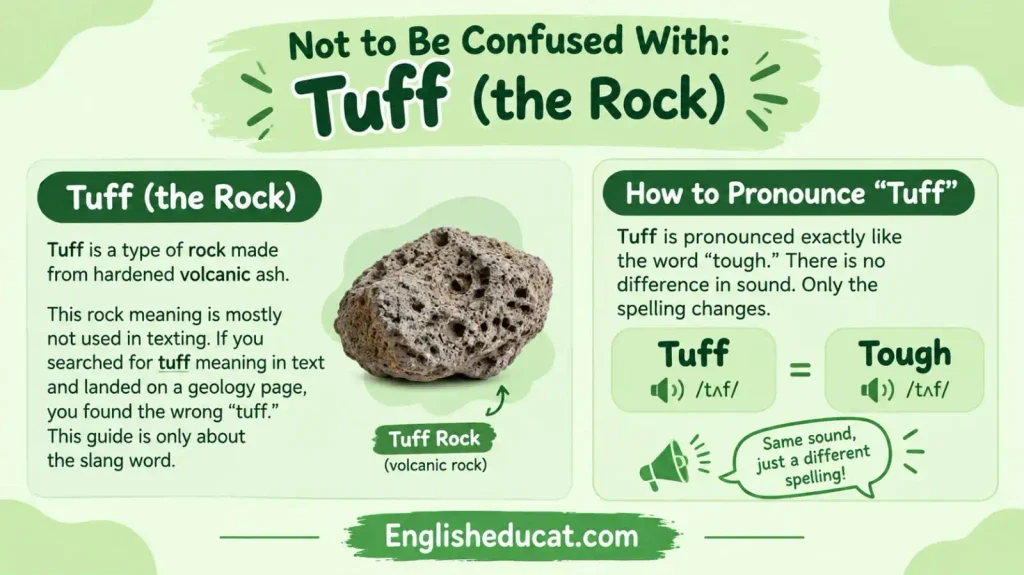
How to Pronounce “Tuff”
Tuff is pronounced exactly like the word “tough.” There is no difference in sound. Only the spelling changes.
Is “Tuff” Good or Bad? The Full Tuff Meaning in Text Explained
This is the most confusing part of the tuff meaning in text, and most guides skip it. The truth about Tuff is that it can be either a compliment or a sympathetic reply. It only depends on the sentence around it.
The Positive Meaning: “Tuff” = Cool or Impressive
Most of the time, tuff means something good. People use it to praise one of the following things:
- Fashion and outfits
- Music and songs
- Sports plays and skills
- Gaming moves
- Art and creative work
If a friend says, “Your painting is tuff,” they are giving you a real compliment. This positive sense is the most common tuff meaning in text online today.
The Sympathetic Meaning: “Tuff” = “That’s Rough” or “That Sucks”
Sometimes, tuff means the opposite of a compliment. In this case, it works more like “that is rough” or “I am sorry to hear that.”
For example:
- “I failed my math test.” “That is tuff.”
- “My phone screen cracked.” “Tuff.”
Here, tuff is not praising anything. It is showing sympathy for bad news. Crowdsourced slang sites like Urban Dictionary actually list this sympathetic sense right alongside the positive one, which shows the split is real and not just a personal theory. This second tuff meaning in text is real, but it is much less common than the positive one, and it is rarely explained clearly.
How to Tell Which One Someone Means
Context is everything here. If someone shares good news or shows off something, tuff means “cool.” If someone shares bad news or a complaint, tuff means “that is rough.”
I write about internet slang for a living, and this exact ambiguity is something I ran into firsthand. While cross-checking real posts on TikTok and Reddit for this piece, I noticed the word “tuff” appear twice in very different ways. First, it appeared under a bragging comment: “new car, feeling tuff.” Just a few posts later, the same word appears as a flat reply to someone venting about a bad day.
Most slang guides only sample the positive use. They never mention the second one. That is exactly why so many people search for the tough meaning in text and still feel confused afterward. A simple rule helps: read the full sentence right before the word “tuff.” Good news and “tuff” means a compliment. Bad news and “tuff” means sympathy.
Where Does the Slang “Tuff” Come From?
The tuff meaning in text has real roots. It did not just appear overnight.
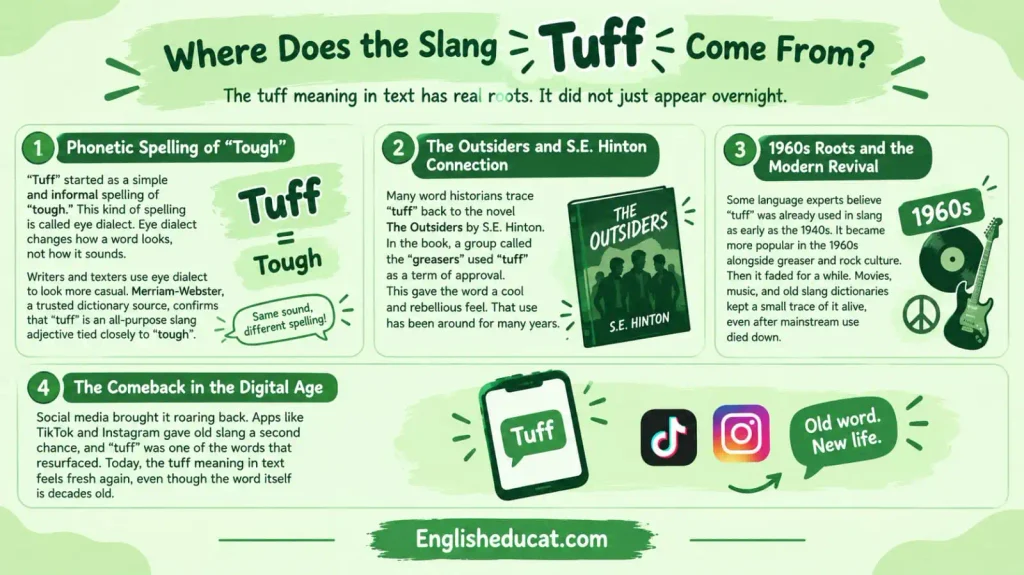
Phonetic Spelling of “Tough”
“Tuff” started as a simple and informal spelling of “tough.” This kind of spelling is called eye dialect. Eye dialect changes how a word looks, not how it sounds.
Writers and texters use eye dialect to look more casual. Merriam-Webster, a trusted dictionary source, confirms that “tuff” is an all-purpose slang adjective tied closely to “tough”.
The Outsiders and S.E. Hinton Connection
Many word historians trace “tuff” back to the novel The Outsiders by S.E. Hinton. In the book, a group called the “greasers” used “tuff” as a term of approval. This gave the word a cool and rebellious feel. That use has been around for many years.
1960s Roots and the Modern Revival
Some language experts believe “tuff” was already used in slang as early as the 1940s. It became more popular in the 1960s alongside greaser and rock culture. Then it faded for a while. Movies, music, and old slang dictionaries kept a small trace of it alive, even after mainstream use died down.
Social media brought it roaring back. Apps like TikTok and Instagram gave old slang a second chance, and “tuff” was one of the words that resurfaced. Today, the tuff meaning in text feels fresh again, even though the word itself is decades old.
Tuff vs. Tough: What’s the Difference?
People often mix up tuff and tough. But the two words serve very different jobs in writing.
Spelling and Formality
“Tough” is the correct and standard English word. It means strong, difficult, or hard to break.
“Tuff” is informal slang. People use tuff in texts, comments, and casual chats, not essays or reports.
Other Examples:
- “That exam was tough.” (standard English, means difficult)
- “That exam was tuff.” (slang, could mean impressive or, in some cases, rough)
- “She has a tough personality.” (standard English, means strong-willed)
- “Her new tattoo is tuff.” (slang, means cool)
Knowing this difference will help you to use each word correctly.
How Gen Z Uses “Tuff” Today (Platform-by-Platform)
Gen Z has made the tuff meaning in text part of everyday online language. Here is where you will mostly find it.
TikTok and Instagram
On TikTok, “tuff” usually appears in comments praising a video, dance, or transformation. On Instagram, it often appears in captions about outfits, trips, or achievements.
Snapchat, X, and Discord
Friends use “tuff” in quick replies to stories or photos on Snapchat. On X (formerly Twitter), it often appears as a short reaction to a viral post or clip. On Discord, gamers drop “tuff” in chat to react to something impressive in real time.
Gaming Chat
In gaming spaces, “tuff” often praises skill. A great play, a clutch win, or a smooth combo might all get called “tuff” by other players.
Sports and Fashion Contexts
In sports talk, “tuff” can describe strong defense or a gutsy performance. In fashion circles, it usually means an outfit or accessory looks sharp and stylish.
Regional Spread
“Tuff” started in American slang, but it has spread far beyond the United States. You will now spot the same tuff meaning in text among young users in the UK, Canada, and Australia, thanks mostly to shared social media trends.
Tuff vs. Similar Slang (Comparison Table)
The tuff meaning in text sits close to several other popular slang words. Here is how it compares with others:
| Tuff | Cool, impressive (or sympathetic) | Fashion, music, sports, gaming |
| Fire | Excellent, amazing | Music, photos, videos |
| Sick | Amazing, impressive | General compliments |
| Dope | Very cool | Casual chats |
| Lit | Exciting, fun | Parties, events |
| Hard | Extremely good | Music, fashion |
| Clean | Stylish, well-made | Design, outfits |
Words like “fire” and “lit” mostly stay positive. Tuff is different; it can swing either way depending on the sentence around it. That flexibility is part of what makes the tuff meaning in text so easy to misread if you are new to it.
When to Use “Tuff” and When to Avoid It
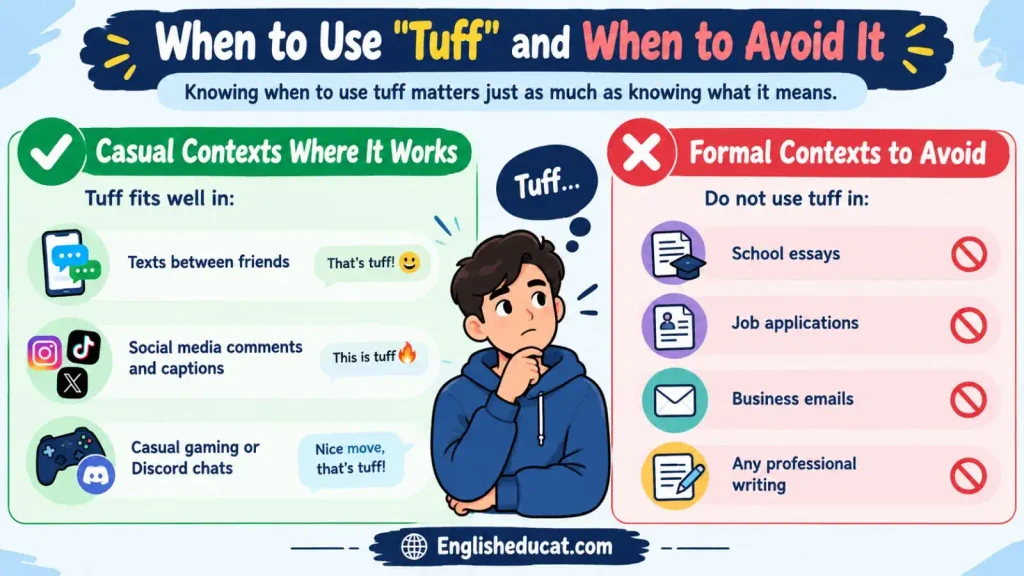
Knowing when to use tuff matters just as much as knowing what it means.
Casual Contexts Where It Works
Tuff fits well in:
- Texts between friends
- Social media comments and captions
- Casual gaming or Discord chats
Formal Contexts to Avoid
Do not use tuff in:
- School essays
- Job applications
- Business emails
- Any professional writing
Formal Alternatives
If you need a formal version of a compliment, then try following words instead:
- Excellent
- Impressive
- Outstanding
- Remarkable
These words carry the same praise without sounding too casual. A formal word does not change your meaning. It just makes sure your message lands the right way in front of a teacher, boss, or client.
How to Respond When Someone Says “Tuff”
If someone calls your outfit, post, or skill “tuff,” they are complimenting you. A simple “thanks!” or “appreciate it!” works perfectly.
If someone replies “tuff” to bad news you shared, they are showing sympathy. In that case, you might just say “yeah, it was rough” and move on.
Frequently Asked Questions
What does tuff mean in text?
In text messages, “tuff” means something cool, impressive, or admirable. It is a playful, informal spelling of the word “tough,” and people usually use it as a compliment about clothes, music, or skills. This positive sense is by far the most common tuff meaning in text you will come across on social media today.
Is tuff the same as tough?
Not exactly. “Tough” is the standard English word for something difficult, strong, or hard to break, and it is fine to use in essays or formal writing. “Tuff” is casual internet slang that usually means cool or impressive, though in some sentences it can flip to mean the opposite, closer to “that’s rough.”
What does “that’s tuff” mean?
“That’s tuff” usually works as a sympathetic reply to bad news, similar to saying “that’s rough” or “that sucks,” rather than a compliment. Whether it is positive or sympathetic depends entirely on what came right before it: good news usually gets a positive “tuff,” while bad news usually gets the sympathetic version.
Is tuff a compliment?
Most of the time, yes, calling something “tuff” means you find it cool, impressive, or worth praising. The only exception is when someone uses “tuff” as a sympathetic reply to bad news, similar to saying “that’s rough,” which is not really a compliment at all.
What does tuff stand for?
Nothing. “tuff” is not an acronym and does not stand for any hidden phrase. It started as a simple, informal spelling of the word “tough,” and over time it picked up its own separate slang meaning online, mostly used as a compliment among younger internet users.
Is tuff popular on TikTok?
Yes, “tuff” is widely used across TikTok, Instagram, and Snapchat, especially in comments and captions that praise an outfit, video, or achievement. It usually appears alongside similar slang words like “fire,” “dope,” and “lit,” all of which express strong approval.
Can I use tuff in professional writing?
No, “tuff” is casual internet slang best kept to texts, social media, and conversations with friends. In professional or academic writing, such as emails, essays, or job applications, use formal words like “excellent,” “impressive,” or “outstanding” instead to keep your tone appropriate.
Conclusion
The tuff meaning in text usually comes down to two simple ideas: a compliment when things are going well, and a moment of sympathy when they are not. Once you know the pattern, knowing the difference becomes second nature. Next time you see “tuff” appearing in a chat, look at what came right before it. That one clue will tell you everything you need to know.

Senior English Content Editor
Sarah has over 10 years of experience teaching English as a Second Language in Chicago public schools. She specializes in vocabulary building and simplifying complex word meanings for everyday learners. Sarah holds a Master’s degree in English Education from the University of Illinois.